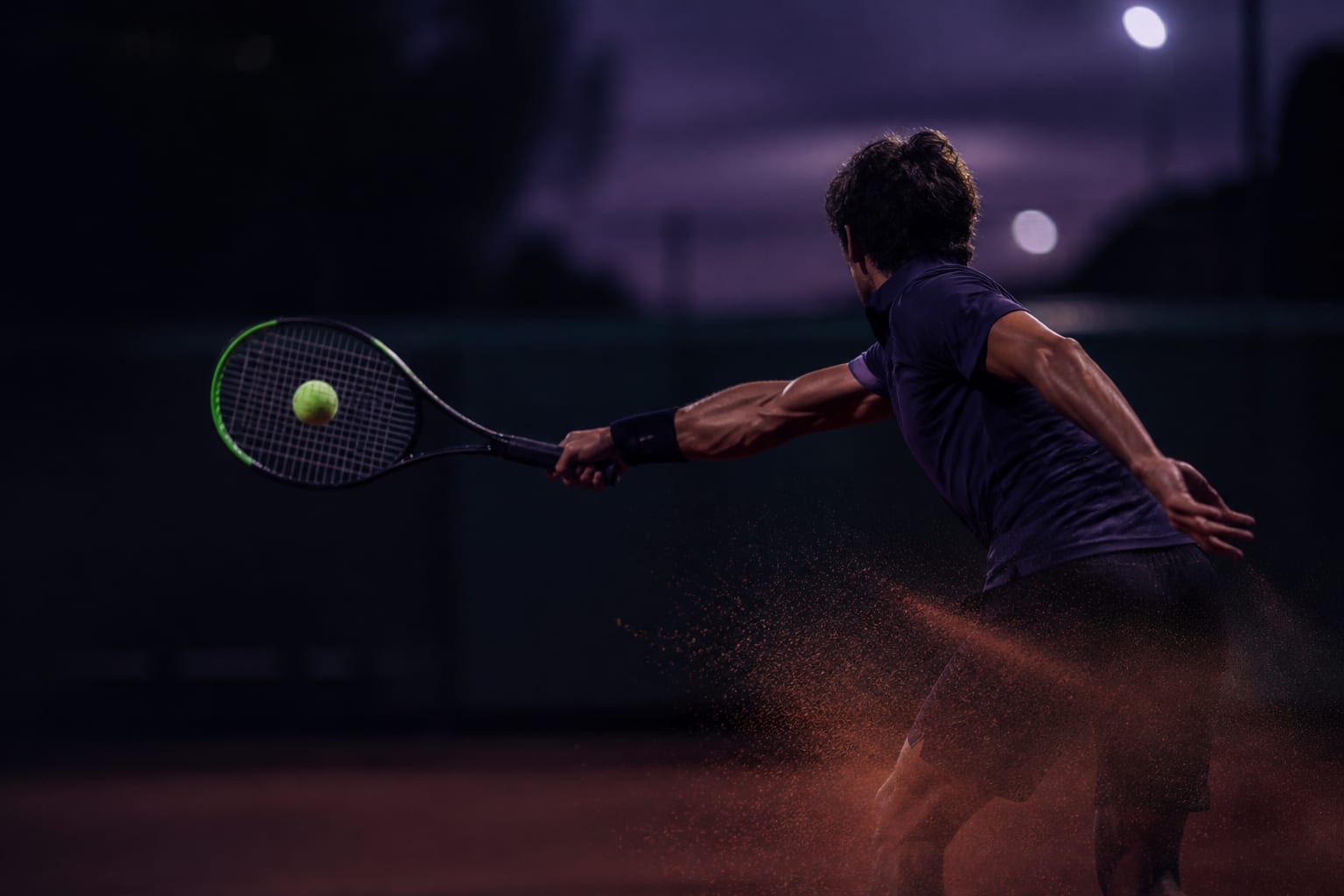
Justine Henin won seven Grand Slam singles titles, four at Roland Garros, in 2003, 2005, 2006 and 2007, plus the US Open in 2003 and 2007 and the Australian Open in 2004, along with Olympic gold in Athens in 2004. She did it at 1.67 m, in an era whose defining trend was height and raw power, and she did it hitting a one-handed backhand when almost every rival in the top ten used two.
That combination is why her backhand is still the shot coaches point at. It was not a defensive slice used to survive a rally until a forehand appeared. She attacked with it, changed direction with it, and hit it flat, sliced or heavy from a preparation that looked identical every time.
The grip and the address position
Henin used an eastern backhand grip: for a right-hander, the base knuckle of the index finger sits on the upper-left bevel of the handle. The racquet face is slightly closed as the hands set. That grip is what makes the disguise possible, from one address position she could drive through the back of the ball, brush up it for topspin, or open the face late for a slice, and an opponent reading the preparation alone got no information.
The unit turn, and the job of the left hand
The preparation begins with the shoulders, not the arm. Her left hand stayed on the throat of the racquet as the body turned, so the racquet travelled back because the torso rotated rather than because the arm pulled. This is the single most copyable thing about the shot, and the one most club players skip: taking the racquet back with the arm leaves the shoulders square, and a square chest cannot deliver a one-hander.
The left arm then extends backwards through the swing. It reads as a stylistic flourish and it is not. It stops the chest opening early, keeps the shoulders level, and gives the rotation something to work against.
Contact in front, and the straight hitting arm
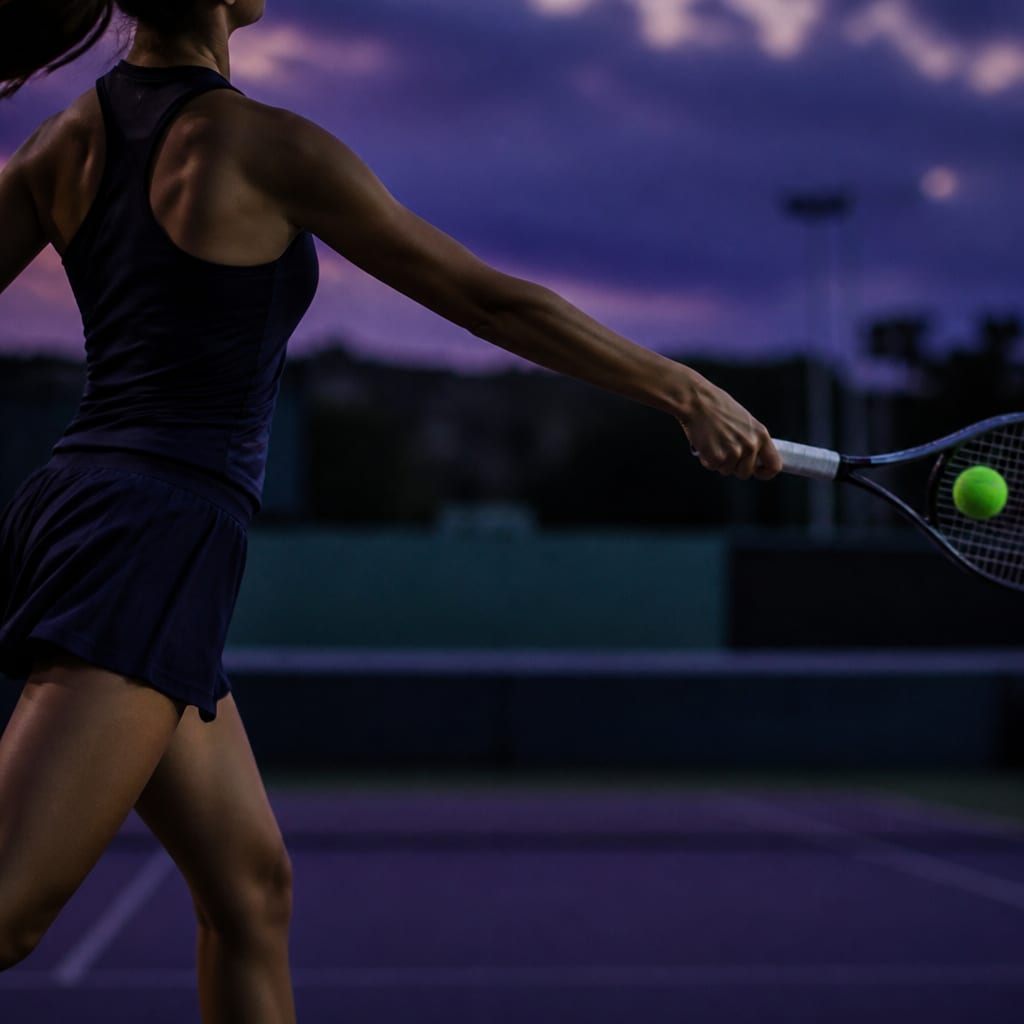
Her contact point sat noticeably further in front of the body than most one-handers manage, with the hitting arm straightening as it arrived. A one-handed backhand struck late collapses at the elbow, because there is no second hand holding the racquet face. Meeting the ball early, inside the baseline where possible, is what let her take time away from opponents who out-powered her on paper.
Three balls from one swing
The drive finishes long and high with the shoulders having rotated through. The topspin version adds a steeper low-to-high path and a shoulder-over-shoulder finish, which is how she got the ball to climb off the clay at Roland Garros. The slice keeps the same shoulder turn but opens the face through contact and finishes lower and further across the body, skidding the ball low to reset a rally or draw a short reply.
What this implies for practice
The mechanics above decide what repetition should actually target, and almost none of it needs a partner hitting hard.
Shadow swings with the left hand fixed on the throat, stopping at the top of the turn to check that the shoulders, not the arm, did the work. Slow feeds taken deliberately early, so that contact in front becomes the default rather than something you reach for under pressure. Alternating drive, topspin and slice off identical feeds, which trains the disguise directly: if the preparation changes when the intended ball changes, the shot is readable.
Then cross-court and down-the-line patterns off that same preparation. A one-hander that can only go cross-court is a shot an opponent can camp on.
What does not come from drills is her tolerance for heavy topspin at pace, and it is worth being straight about that. Absorbing a high, kicking ball on one hand takes years of repetition against players who hit it, and it is the reason the two-hander remains the sensible default for most people. What transfers is the preparation, and the preparation is where nearly every amateur one-hander goes wrong.
Common questions
Why was Justine Henin's backhand unusual for the women's game?
She played a one-handed backhand at a time when almost every leading woman used two. The two-hander is easier to stabilise against pace, which is why it dominates the tour; Henin kept one hand and still hit through the ball off both wings, which is why coaches still use her as the reference model.
What grip did Henin use on the backhand?
An eastern backhand grip, with the base knuckle of the index finger on the upper-left bevel for a right-hander. That grip sits the racquet face slightly closed at address and lets one preparation produce a drive, a topspin ball or a slice without a visible change.
How did she generate power at 1.67 m tall?
From rotation and contact point rather than mass. She took the ball early, met it well in front of the body with the hitting arm straightening through contact, and drove the back shoulder through the shot. Height helps on the serve; on a groundstroke, timing and a contact point in front do more than reach.
What does the non-hitting arm actually do?
It counterbalances. On the unit turn the left hand stays on the throat of the racquet, which forces the shoulders to turn together instead of the arm pulling back on its own. Through the swing that arm extends backwards, keeping the chest from opening early and the shoulders level.
Can a club player learn a one-handed backhand this way?
The preparation is the transferable part. Early shoulder turn, the non-dominant hand on the throat, and contact in front are mechanical habits anyone can drill without pace. What does not transfer easily is her margin against heavy topspin, which came from years of repetition at speed.
Why did she retire as world number one?
She announced her retirement in May 2008 while ranked first, the first woman to leave the tour from the top of the rankings. She returned in 2010, reached the Australian Open final that January, and stopped again in early 2011 after an elbow injury.