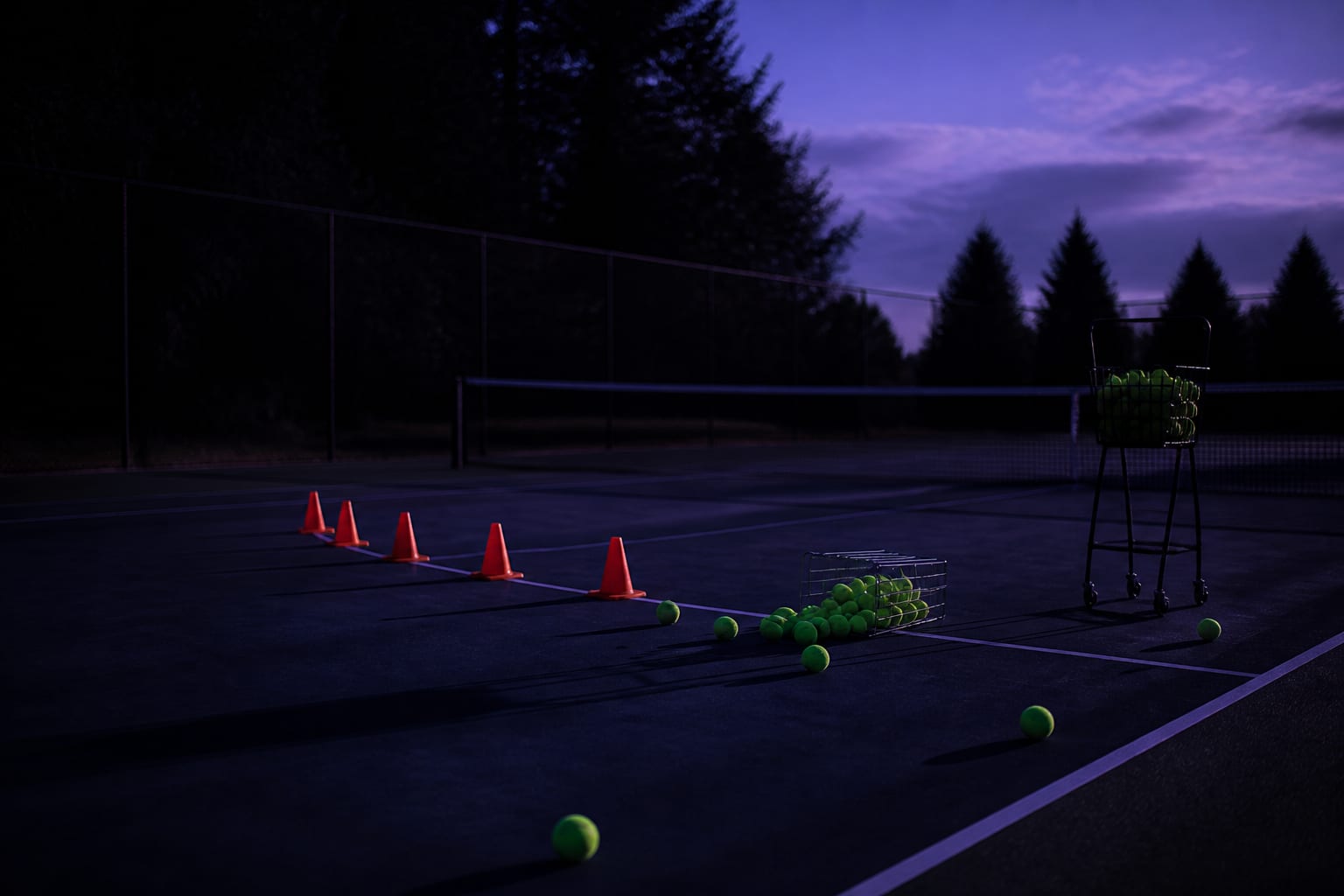
Tennis footwork decides more points at club level than stroke quality does. A technically sound forehand hit from a poor position produces a worse ball than a modest forehand hit from a good one, and arriving in a good position is entirely a movement problem.
Why footwork matters more than it used to
When serve-and-volley was the dominant style, the footwork that mattered was the handful of steps between the service line and the net. The modern game is predominantly an aggressive baseline game, which means covering the full width of the court repeatedly within a single point, then doing it again on the next one. Movement stopped being the thing that got you to the net and became a skill trained on its own.
That shift is why footwork drills are now standard at professional level and increasingly common below it. The pros work on movement daily, usually with a trainer. Nothing about the drills themselves requires that level of support — most need a partner, a basket of balls and a court.
Three movement patterns worth separating
Most footwork problems come down to one of three patterns being missing rather than all of them being weak.
The split step is a small hop timed so you land as your opponent strikes the ball, weight on the balls of the feet, ready to push off either way. Landing too early means you have already stopped moving; landing too late means you are in the air when you need to be pushing off.
The side shuffle keeps your body square to the court and your options open, but covers ground slowly. It suits balls within a step or two.
The crossover step covers more distance per stride and is what you need on a genuine chase, at the cost of turning your hips away from the court, which is why it needs a deliberate recovery afterwards rather than an assumption that you will drift back.
The recovery step, and why drills usually miss it
Recovery is the movement back toward the middle after the shot. It is the most commonly skipped part of footwork, for two reasons. The shot feels finished once the ball has left the strings, so attention drops. And most practice drills feed to the same spot repeatedly, so there is nothing to recover from. The drill quietly trains half the movement and leaves the other half untrained.
Any footwork drill worth running should therefore make recovery a condition of the repetition, not an optional extra.
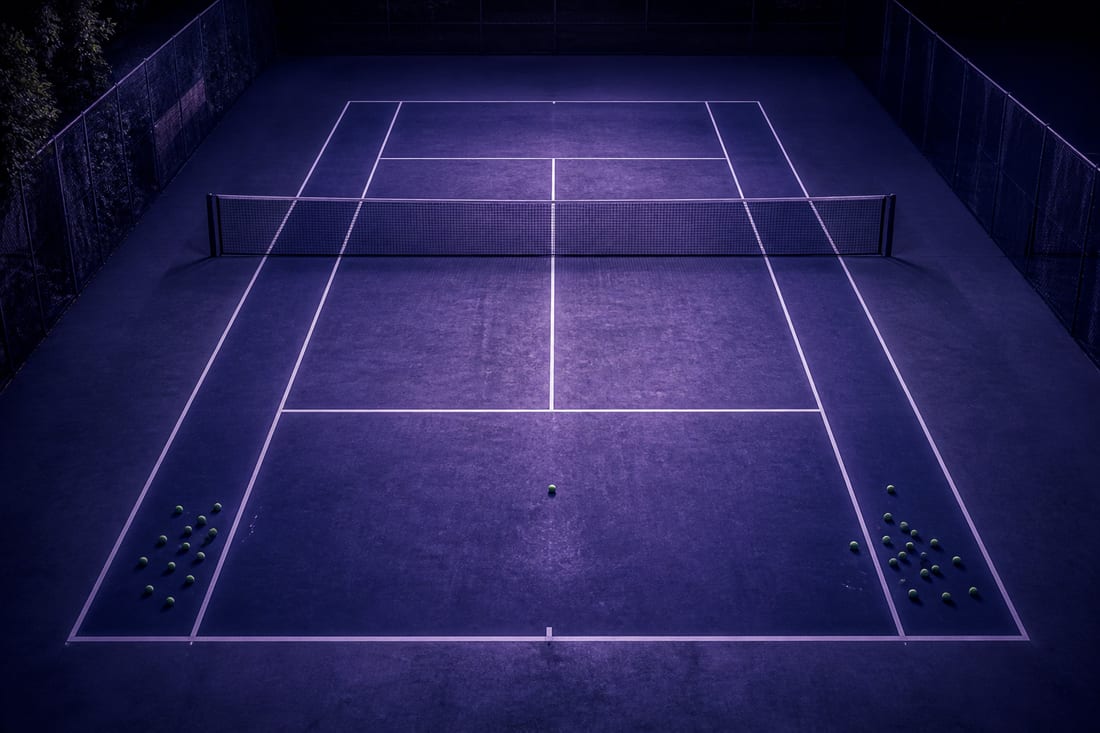
The 55-ball drill
A high-intensity drill built around exactly that. A coach or partner feeds 55 balls from a cart, alternating side to side, and the player recovers to the centre of the court after every ball. The footwork has to be fast and explosive through the shuffle, and the recovery has to be complete before the next feed arrives.
The volume is the point. By the second half of the basket the legs are tired, which is when the recovery step is the first thing to disappear, and training it while tired is the only way it survives into a third set. Finishing with a set of push-ups adds upper-body load at the point of maximum fatigue.
Scale it to fitness rather than running the full count from the start. A 20-ball version with complete recoveries builds more than 55 balls with half of them abandoned.
Shadow work with lateral movement
The version that needs no partner and no balls: shadow-swing a forehand and a backhand while moving laterally along the baseline, in timed sets. Marat Safin used a variant of this, and it is worth understanding why it works. With no ball to hit, there is nothing to salvage a poor position. The only thing being rehearsed is the turn, the strike position and the recovery. Attention lands on the feet because nothing else is competing for it.
Three sets is a reasonable starting point, and it works either with a partner mirroring the movement or alone against a clock. It is also the one footwork drill that transfers straight into a warm-up.
Common questions
Why has footwork become more important than it used to be?
Because the game moved to the baseline. When serve-and-volley dominated, the footwork that mattered was the few steps around the net. An aggressive baseline game means covering the full width of the court repeatedly within a single point, so movement became a skill in its own right rather than a means of getting forward.
What is the split step and when do you do it?
A small hop timed so you land as your opponent strikes the ball. Landing balanced with weight on the balls of the feet lets you push off in either direction. Land too early and you have already stopped; land too late and you are still airborne when you need to move.
Should you shuffle or cross over to reach a wide ball?
Shuffle for short distances, cross over for longer ones. A side shuffle keeps you square to the court and ready to change direction, but covers ground slowly. A crossover step covers more ground per stride at the cost of turning your hips, so it suits a ball you have to genuinely chase.
What is the recovery step and why does it get skipped?
The movement back toward the middle after you hit. It gets skipped because the shot feels finished once the ball leaves the strings, and because drills that feed to one spot never require it. A drill without a recovery requirement trains half the movement.
How does the 55-ball drill work?
A partner or coach feeds 55 balls from a cart, alternating side to side, and you recover to the centre of the court after every single one. It is deliberately high volume: the point is cardiovascular load and explosive lateral movement under fatigue, not stroke quality.
Can you train footwork without a partner or a ball?
Yes, and shadow work is the most underrated version. Shadow-swinging a forehand and backhand while moving laterally rehearses the turn, the strike position and the recovery with no ball to distract you, which is precisely why the footwork gets attention it would not otherwise receive.