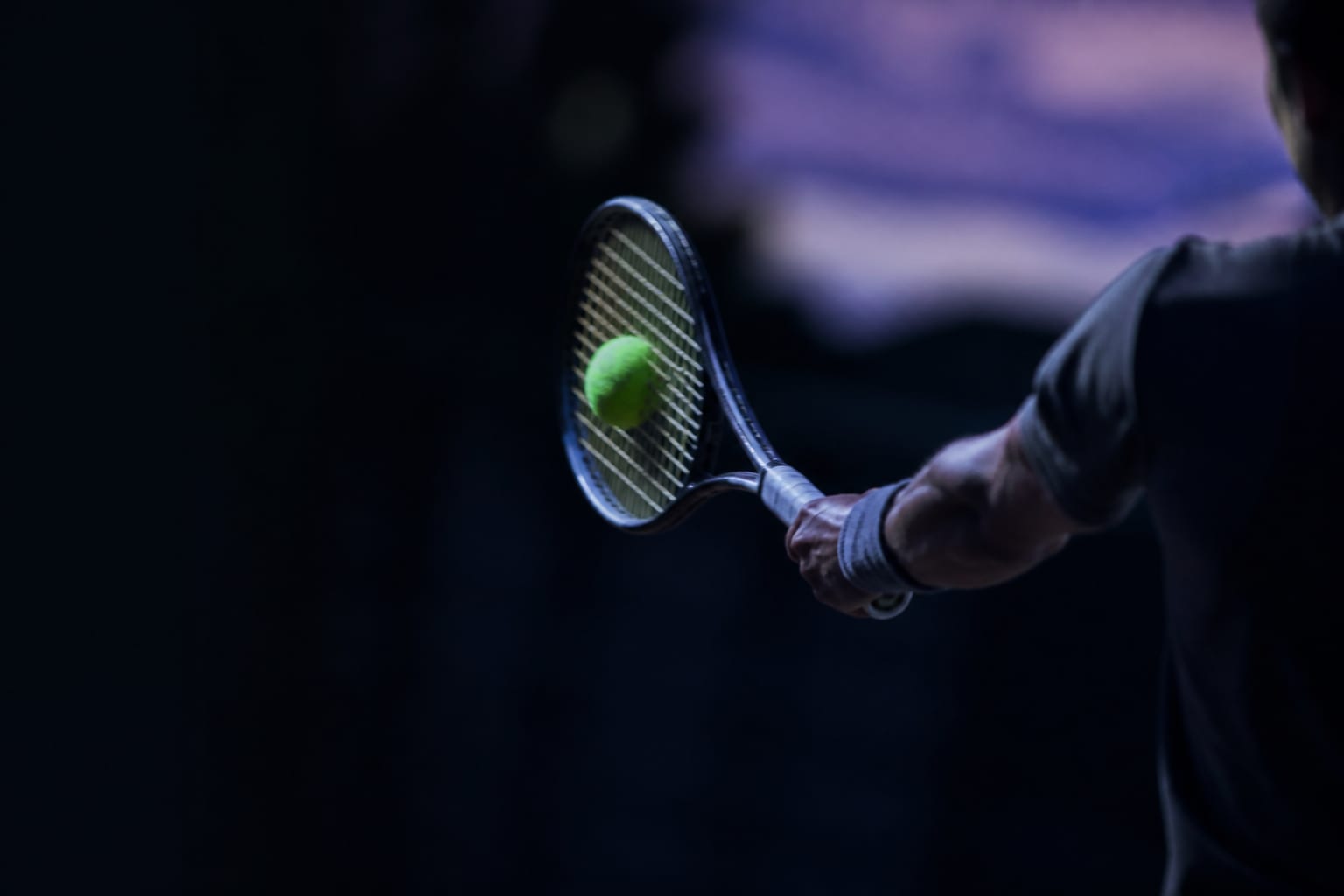
Choosing a tennis grip is the first real technical decision a player makes, and it constrains everything downstream of it.
Learning to develop the right tennis forehand grip is up to personal preference, but a few forehand grips dominate the world of professional tennis. For a lot of players, finding the best tennis forehand grip is a non-issue.
Here are a few pointers on the different grips that you can try, as well as a few words on the evolution of the tennis forehand grip and the implications that such change might have for you.
That's because when they took their first tennis lesson, the teacher said to simply "shake hands with the racquet" and that was that. You never realized that there were other ways to hold a tennis racquet on the forehand side, neither did you realize that most of the top players in the world don't just "shake hands with the racquet." Now that you've improved your game over the years, you might be ready to experiment with a different tennis forehand grip and add a little zing to your game.
Overview of the Tennis Grip Options
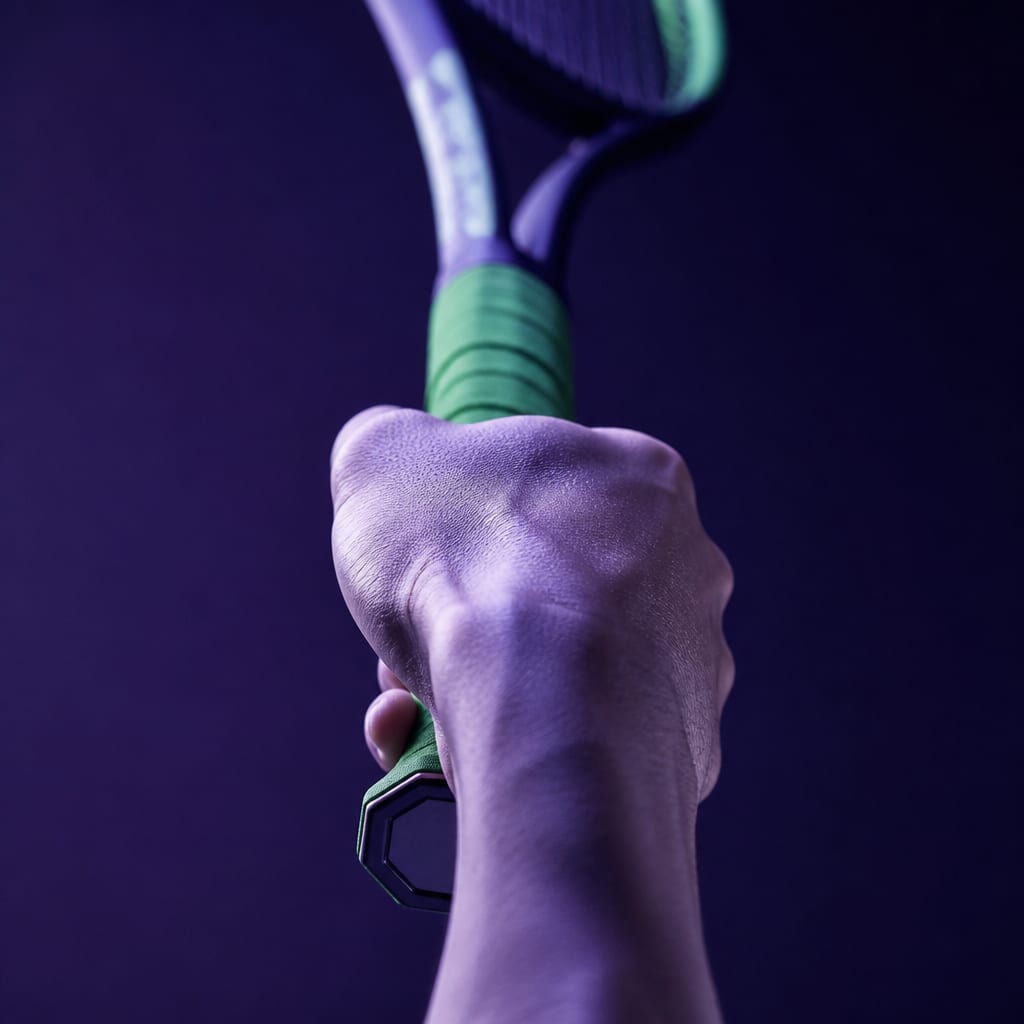
Eastern Tennis Forehand Grip
This is the classic grip that your first teacher passed on to you. Many advanced players still use it, but most top pros have turned to the Semi-Western grip. To adopt the Eastern grip, simply place the palm of your hand on the side plane of your handle, parallel to your racquet face.
The base knuckle of your index finger should be on this plane, producing a vertical racquet face. With a normal swing plane, this is the most natural and physically secure grip. It is also the most versatile grip because you can easily tilt it for slice or keep the face vertical to brush the ball and produce topspin.
This is not a grip, however, that will give you maximum topspin or enable you to handle heavy topspin from your opponent. For that, you will need other options described below.
Semi-Western Tennis Forehand Grip
Place your palm on the lower right slant bevel, the plane that is 45 degrees clockwise from the plane of your strings. This will give your racquet a downward tilt, so you will have to meet the ball slightly farther forward than you would with an Eastern grip. You will also need to swing upward more sharply with this grip, which will produce topspin more often. It is possible to hit a flat shot with this grip, but a shot with great topspin occurs more naturally. This grip is also a good one for handling high bounces that result from your opponent's topspin shots. It is not a good grip for hitting slice or low balls. This is the preferred grip of many pros and has led to the changes in the game that feature tons of hard-hit topspin.
Western Tennis Forehand Grip
Place your palm on the bottom plane of your handle, a full 90 degrees clockwise from the strings. Now, your racquet face tilts severely downward, thus you must meet the ball even farther forward than with a Semi-Western grip. Consequently, the most natural swing plane is upward and very fast, which generates tremendous topspin (think Rafael Nadal). This grip handles high balls quite well but has a tough time with low shots. It is possible, but difficult, to hit flat with this grip, and slice, well, that is well nigh impossible with the Western grip. Once you hold the racquet with this grip, you'll see why.
Continental Tennis Forehand Grip
Place your palm on the upper right slant bevel, 45 degrees counterclockwise from the Eastern grip. Now, your racquet face tilts upward, naturally lending toward slice. You can hit flat with this grip, but your shot will be weaker than with the Eastern grip.
This grip has declined in popularity, as crushing the ball with maximum topspin has gained admirers and become standard operating procedure on the pro tour. Historically, this grip began to go out of vogue when fewer tournaments were played on grass after the early 1970s and hitting low bounces became a priority only at Wimbledon.
Hawaiian Tennis Forehand Grip
Place your palm 135 degrees clockwise from the Eastern, or 45 degrees farther west than the Western grip. Another way to hold the racquet with this grip is to grab the racquet with a Continental grip, then twist your wrist and forearm 180 degrees clockwise so that your knuckles are facing forward. You will see that you are going to have to hit the ball far out in front of your body or extremely high for this grip to work well for you.
As a result, this grip is totally unsuitable for flat or slice shots. This grip got its name from being further west than Western, which got its name from being adopted first in California. West of Cali? That would be Hawaii. This grip is quite rare, but did gain a few days of fame when a player named Alberto Berasategui used it to reach the 1994 finals at Roland Garros.
Commonly Used Tennis Forehand Grips
As mentioned briefly when considering the different tennis forehand grips, the average position of forehand grips for the pros has evolved dramatically in the past 30 years, from somewhere between Eastern and Continental to fully Semi-Western. Ever wonder why tennis seems to now be simply a contest between two players trying to slug the ball as hard as they can from the baseline? Part of the answer lies in the grips that the players favor now.
This also explains why you see so little slice in today's pro game and why players do so little with the low balls that they reach. If you can overpower players with your topspin, generated from a Semi-Western grip, then you might want to hold the racquet like most pros do. However, if you play people who hit a lot of short balls, or you enjoy serving up some slice in your game, you might want to stick with the Continental grip.
Classic Tennis Forehand Grips
The great Stan Smith used a grip halfway between Eastern and Continental like most of his late '60s peers, and films of those matches are fascinating to watch as the variety of shots are hit and many flat and slice strokes are used. Watch where Stan and others in the '60s met the ball, too. You will see that he made contact most of the time at waist level or lower.
Now, watch a modern player smack the ball. If you look closely, you will see that many of them have to hit the ball at chest level, due to the enormous topspin that has been generated by their opponents. That necessitates at least a Semi-Western grip.
In addition, as mentioned before, many more tournaments were held on grass in Smith's era, thus more low balls skidded towards him and he wanted to use slice more often to accentuate that low bounce for his unlucky opponent. Such knee-bending retrieval of low bounces naturally leads to a grip closer to Continental than Western. By the way, this is why many players who do well on grass don't fare so well on clay or even hard courts. It's not simply a matter of style, it's a matter of grip and strategy as well.
Higher Contact Points and Increased Topspin: A reason for today's modern tennis forehand grips?
Finally, the quick brushing action that must be used to hit topspin is rendered much easier by today's light-weight racquets with larger string beds. As it has become easier to swing up and brush balls with a larger racquet face, the Western grips have exploded in popularity. Perhaps you will want to change your tennis forehand grip to both keep up with the times and imitate the style of your favorite pro, who most likely crushes topspin at every opportunity. Whatever tennis forehand grip you happen to choose, don't stick with the Continental grip simply because it is what you always have used. Who knows?
A grip change might bring changes to your game that you have long sought, and you might end up feeling more comfortable (after much practice) with a new tennis forehand grip. Will the grip alone enable you to join the pro tour? Uh, doubtful, but it might lead to many more victories in whatever domain you play in.
Choosing a tennis grip, and when to change one
A tennis grip is not a preference in isolation: it fixes the racquet-face angle, which fixes where the ball has to be met, which fixes the swing path that can reach it. That is why changing a tennis grip alters a stroke that felt settled, and why a change takes several weeks of repetition before it holds under pressure.
For most improving players the practical range runs from the Eastern to the Semi-Western. The Continental remains the grip for serving and volleying, the Western suits a player already generating heavy topspin who wants more, and the Hawaiian is a specialist choice with severe costs on low balls. The backhand grip is a separate decision with its own constraints.
Common questions
Which forehand grip produces the most topspin?
The Western grip, with the palm on the bottom plane of the handle a full 90 degrees clockwise from the strings. That tilts the racquet face severely downward, so the ball has to be met further forward and the natural swing plane becomes steeply upward and fast. The combination that generates heavy topspin. The trade-off is that it handles high balls well but struggles badly with low ones, and slicing from it is close to impossible.
Why do coaches still teach the Eastern grip if most professionals use Semi-Western?
Because it is the most versatile of the grips. The palm sits on the side plane of the handle, parallel to the racquet face, which produces a vertical face and the most natural and physically secure swing. From there the face can be tilted for slice or kept vertical to brush up for topspin. What it will not give you is maximum topspin, or much help against heavy topspin arriving from the other end.
How far forward do you have to meet the ball as the grip moves west?
Progressively further, and it follows directly from the face angle. An Eastern grip produces a vertical face and a normal contact point. A Semi-Western tilts the face downward, so contact moves slightly further forward. A Western tilts it severely downward and moves contact further forward again. The Hawaiian grip, another 45 degrees beyond Western, requires contact either far out in front or extremely high to work at all.
Why has slice largely disappeared from the professional game?
Grip choice is a large part of the answer. The average professional forehand grip has moved over roughly thirty years from somewhere between Eastern and Continental to fully Semi-Western. The Continental grip tilts the face upward and lends itself naturally to slice, but it declined as maximum topspin became standard. A shift that began when fewer tournaments were played on grass. Grips that favour topspin make slice progressively harder to hit.